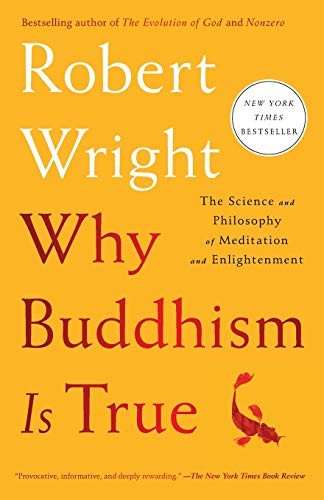
Why Buddhism Is True: The Science and Philosophy of Meditation and Enlightenment
by Robert Wright
Much of what your mind tells you was shaped to help your ancestors survive, not to show you reality, and Robert Wright's case is that Buddhism's diagnosis of the mind holds up against that science. Drawing on his own meditation, he presents mindfulness as a secular way to see through the distortions.
Core ideas
- No self in charge: The psychological theory that the mind is made of modules lines up with the Buddhist doctrine of not-self, or anatta.
- Without the supernatural: Drop reincarnation, keep the mindfulness, and wider practice could make people more reflective, more empathetic and less tribal, he suggests.
- Open to challenge: Critic Adam Gopnik doubted a secularized religion can sustain belief, and Nick Romeo argued the grander claims aren't fully made.
Published2017
Pages368
ISBN9781508235408
ReadOct 2023